


Recent Findings and News
- New MCPC study shows how schools can maximize full-day pre-k’s benefits. November 28, 2023 Link to the study
- CPC preschool participation is associated with lower 30-year Framingham risk scores by age 37 years. October 16, 2023
- New research links high-quality early childhood education to higher postsecondary graduation rates for children who have experienced trauma. October 5, 2023
- CPC preschool participation is found to be associated with significantly lower rates of adverse health outcomes such as smoking, diabetes, and body-mass index in mid-adulthood (age 35-37), a benefit-cost ratio in the range of $1.35–3.66 for the health benefits (net benefit: $3896). May 2022
- COVID Survey Summary Report and Frequencies November 2021
About the Chicago Longitudinal Study
The Chicago Longitudinal Study (CLS) is a federally-funded investigation of the effects of an early and extensive childhood intervention in central-city Chicago called the Child-Parent Center (CPC) Program. The study began in 1986 to investigate the effects of government-funded kindergarten programs for 1,539 children in the Chicago Public Schools.
The study is in its 35th year of operation. Besides investigating the short- and long-term effects of early childhood intervention, the study traces the scholastic and social development of participating children and the contributions of family and school practices to children’s behavior. The CPC program provides educational and family support services to children from preschool to third grade. It is funded by Title I and has operated in the Chicago Public Schools since 1967 (see the CPC History Document).
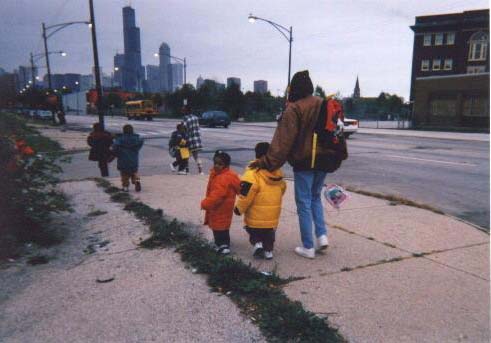
The Chicago Longitudinal Study has four main objectives:
- To evaluate comprehensively the impact of the CPC program on child and family development.
- To identify and better understand the pathways (child, family, and school-related) through which the effects of program participation are manifested, and more generally, through which scholastic and behavioral development proceeds.
- To document and describe children’s patterns of school and social competence over time, including their school achievement, academic progress, and expectations for the future.
- To determine the effects of family, school, neighborhood, and child-specific factors and practices on social competence broadly defined, especially those can be altered to promote positive development and to prevent problematic outcomes.
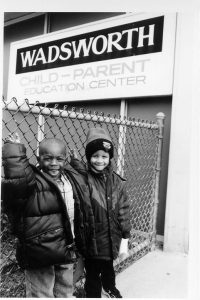
==============================================
Midwest CPC Expansion is a five year project to expand a proven Prek-3rd grade model (Child-Parent Center Program) and evaluate its impacts on children’s well-being. The 2012-2013 preschool cohort includes a partnership of four school districts (Chicago, IL, Evanston, IL, Normal Unit 5, IL, and St. Paul Public School, MN) and eight educational organizations. Additional expansion sites (Madison, WI, and Rochester, MN) opened in Fall 2015. The goals of the Midwest CPC Expansion are to improve children’s school success and increase parent involvement in education and the community, and to develop a sustainability and scale-up plan.
Learn more about Child-Parent Centers. Visit cpcp3.org.
PreK to 3rd Grade Program Registry
=============================================================
Lorraine Sullivan, CPC program founder, 1917-2013.
Sullivan (1971). Let us not underestimate the children.
Lorraine M. Sullivan Memorial Fund of the Child-Parent Education Centers
==========================================================