Policy Breakfast Series
MAKING A DIFFERENCE THROUGH RESEARCH
CEHD's Policy Breakfast Series brings a research focus to the conversation about closing opportunity gaps in Minnesota. Policy Breakfast events examine the role of school leadership, early childhood education, reading and literacy, STEM education, teacher preparation, and children's mental health. Each event discusses the ways CEHD research can inform Minnesota's legislative policies.
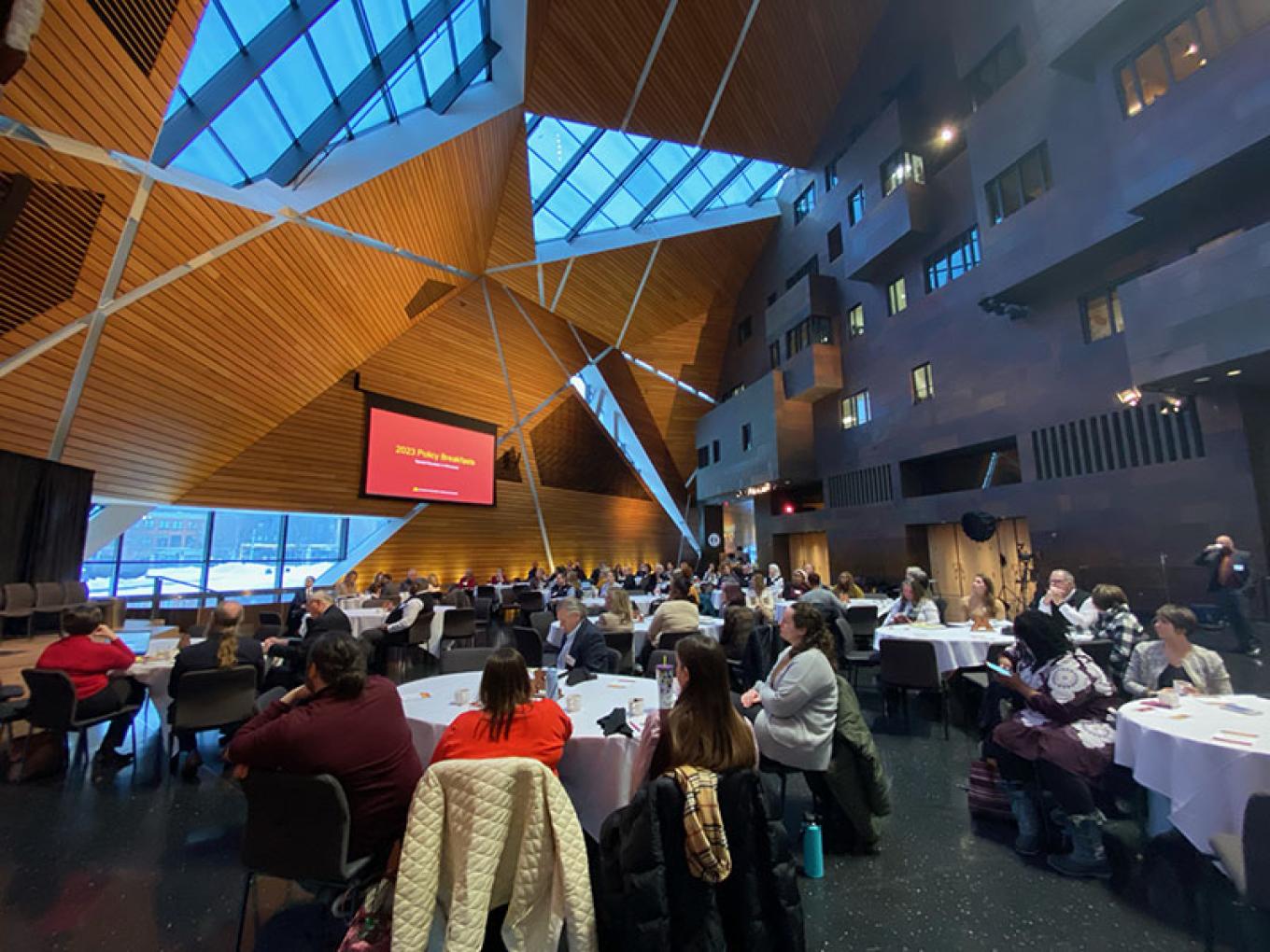
Save the date: January 2026 Policy Breakfast
On Tuesday, January 13, University of Minnesota leaders will be hosting a Policy Breakfast discussion focusing on teacher shortages and preparation pathways in Minnesota. This discussion will bring together community stakeholders and education leaders to explore and strengthen pathways into the teaching profession.
January 13, 2026
8 to 10:30 a.m.
McNamara Alumni Center
University of Minnesota - Twin Cities
Free and open to the public

Cari Maguire
Cari Maguire | Moderator
Cari Maguire is the executive director of the Office of Teacher Education at the University of Minnesota Twin Cities. In this role, she leads the office that supports all teacher licensure programs on the Twin Cities campus with clinical placements, accreditation, licensing and continuous improvement efforts. Cari also serves as the executive director of the Minnesota Association of Colleges for Teacher Education (MACTE), a professional organization of the colleges and universities that offer teacher licensure programs in Minnesota. Cari was a classroom teacher for ten years before moving into teacher education. She works to support high quality and innovative teacher preparation programs at the UMN and across Minnesota.

Gina Boots
Gina Boots | Panelist
Gina Boots serves as executive director of the Minnesota Teachers Joint Apprenticeship Training Committee (MNTJATC) at BrightWorks Education Service Cooperative, where she oversees Minnesota’s first teacher apprenticeship programs. With 19 years of experience as a special educator and educational leader, she leads statewide efforts to develop sustainable, equity-focused pathways in partnership with universities and school districts across Minnesota.
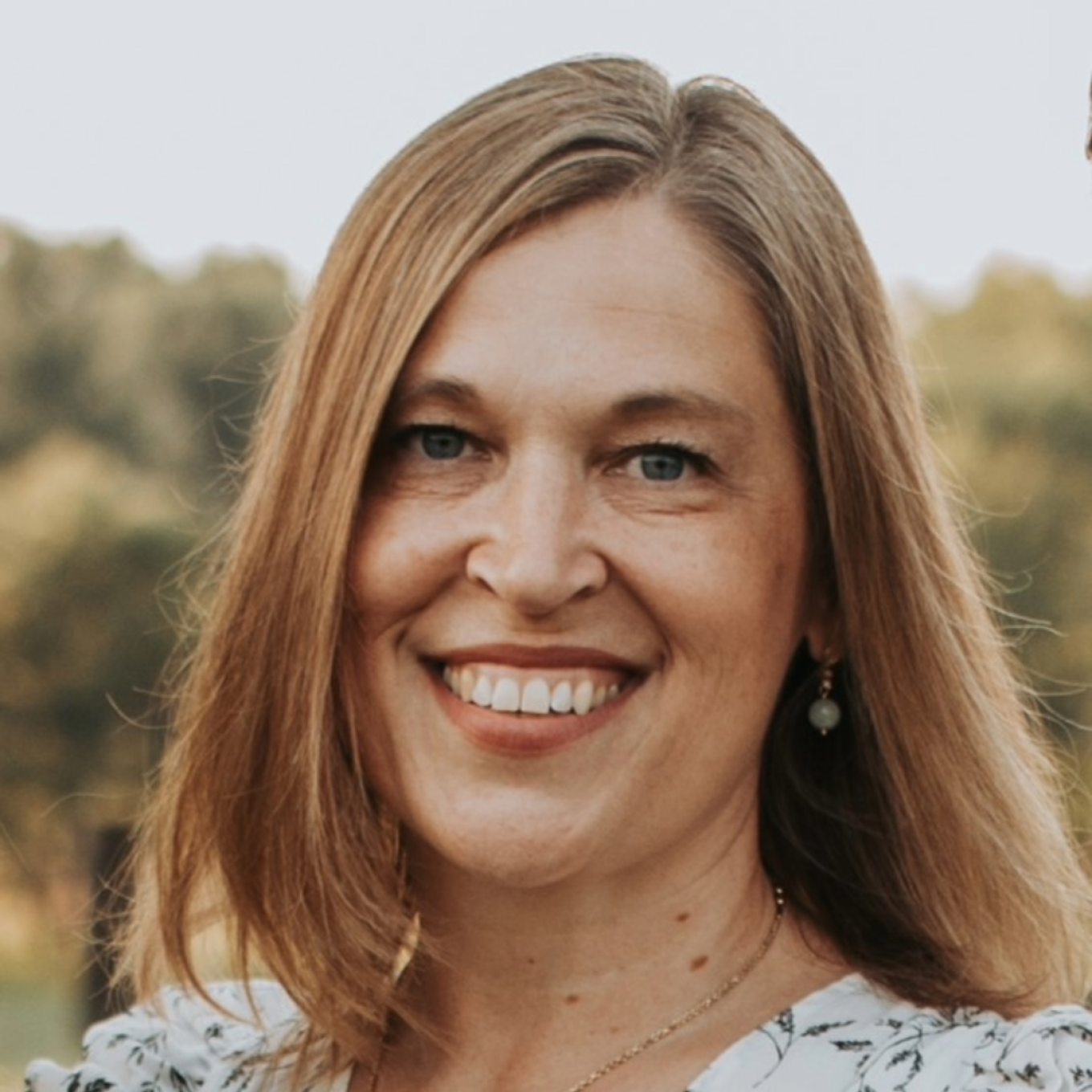
Erin Ðoàn
Erin Ðoàn | Panelist
Erin Ðoàn serves as the director of educator preparation and pathways at Minnesota’s Professional Educator Licensing and Standards Board (PELSB). An executive branch agency, PELSB works to ensure equitable and ethical education practices through establishing licensure standards, quality educator preparation, and stakeholder engagement. Her dedication to the profession includes experience across education, government, and industry. A former teacher, administrator, and teacher educator, she holds a Master of Education from Harvard University and a Bachelor of Arts in Biology and Education from Hamline University.

Emily Lilja Palmera
Emily Lilja Palmer | Panelist
Emily Lilja Palmer is a career educator, currently serving as the principal of Washburn High School in Minneapolis. She earned her B.A. in English, M.Ed. in Secondary Education, and Ph.D. in Educational Leadership all from the University of Minnesota - Twin Cities. Her research works include: “Talking about Race: Overcoming Fear in the Process of Change” and “Media Literacy as a Step toward Gender Equity”. Her current areas of interest include: working with White folks on racial equity, helping teachers prioritize the ever-increasing workload, and transforming our public education system from content-based to skill-based to keep up with our changing world.

Dawn Ransom
Dawn Ransom | Panelist
Dawn Ransom currently serves as the assistant director of educator development in Saint Paul Public Schools. With over two decades of experience spanning classroom teaching, instructional coaching, and district leadership, she is deeply committed to equity. Dawn dedicates her work to designing systems and programs that support and uplift historically marginalized students, families, and staff.
Past events
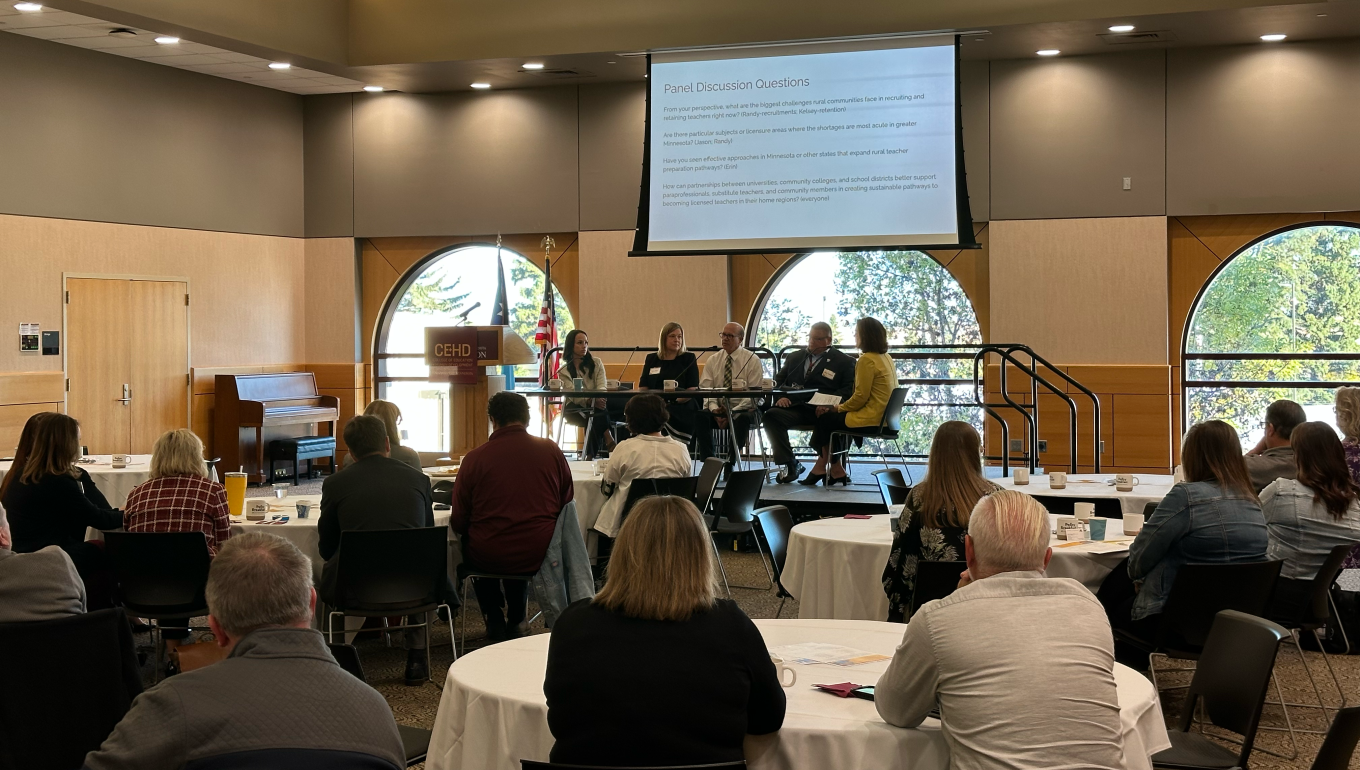
October 2025: Teacher shortages and preparation pathways
On October 13, CEHD hosted approximately 50 educational leaders and policy makers for a Policy Breakfast at Bede Ballroom on the campus of the University of Minnesota Crookston, focused on teacher shortages and preparation pathways in Minnesota.
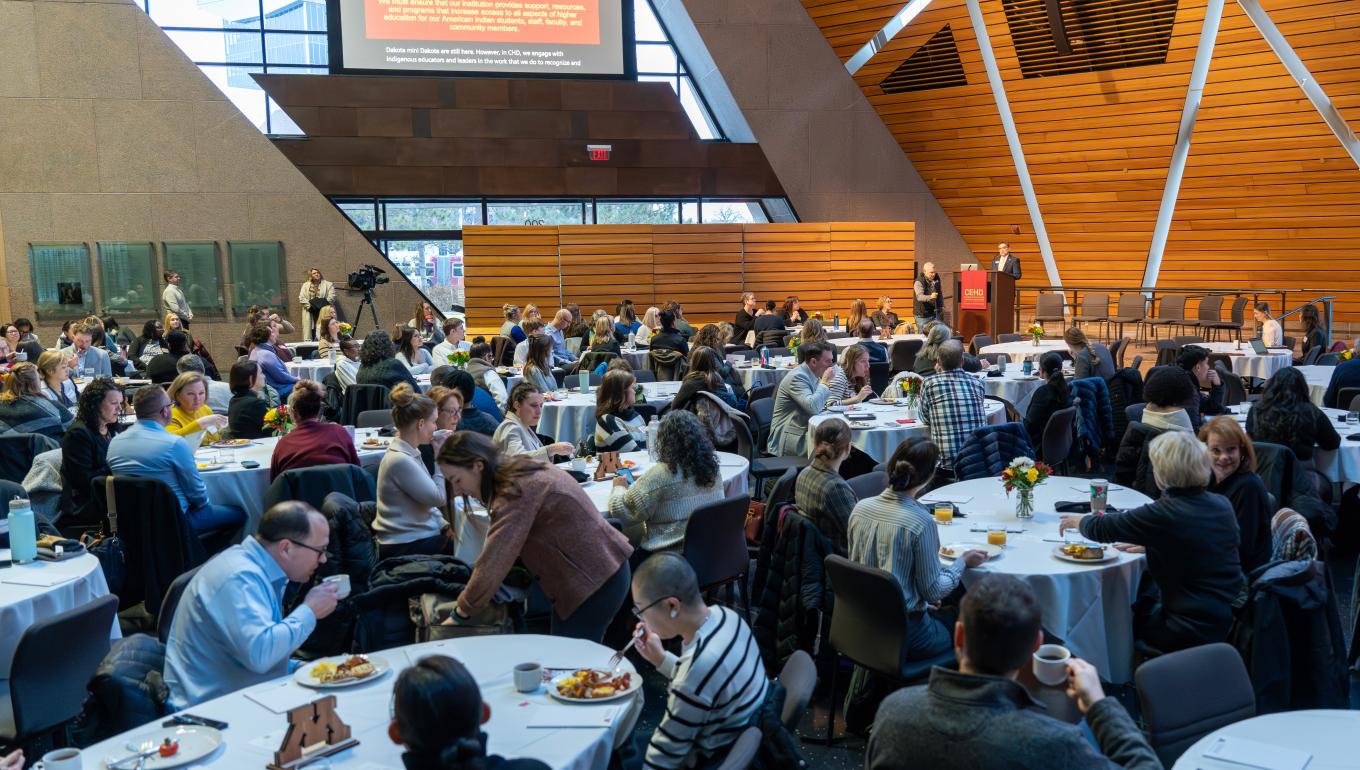
January 2025: The state of children's mental health
On January 7, CEHD hosted more than 200 educational and clinical leaders and policymakers for a Policy Breakfast at McNamara Alumni Center on the University of Minnesota - Twin Cities campus for a discussion about the state of children's mental health. Despite the overwhelming challenges regarding children’s mental health in Minnesota, this Policy Breakfast showcased the impactful advocacy and evidence-grounded promising practices that are underway to support children throughout Minnesota.
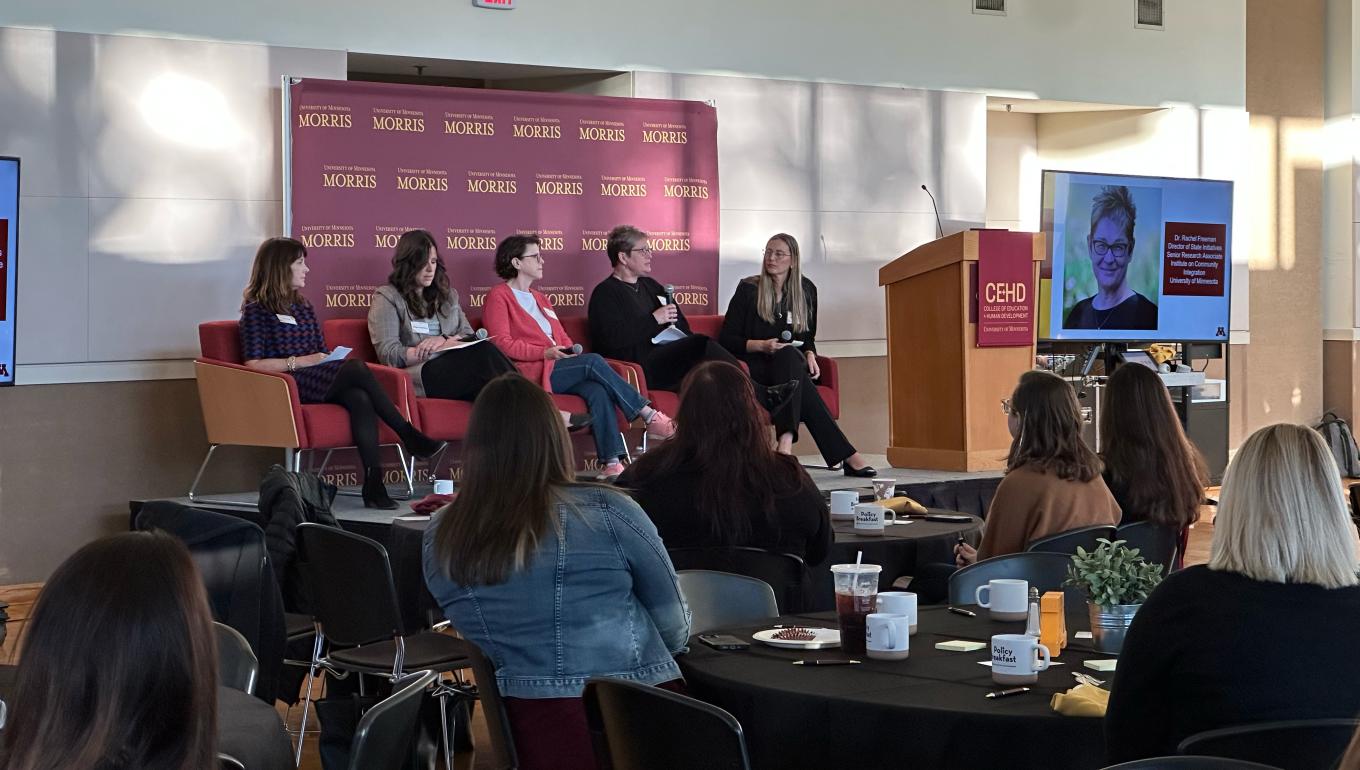
October 2024: The state of children's mental health
On October 28, CEHD hosted more than 60 educational leaders and policy makers for a Policy Breakfast at Oyate Hall on the campus of the University of Minnesota, Morris. The panel discussed the state of children’s mental health in Minnesota. It identified and expanded upon recommendations that were released in early October from the Department of Human Services-formed Acute Care Transitions Advisory Council.
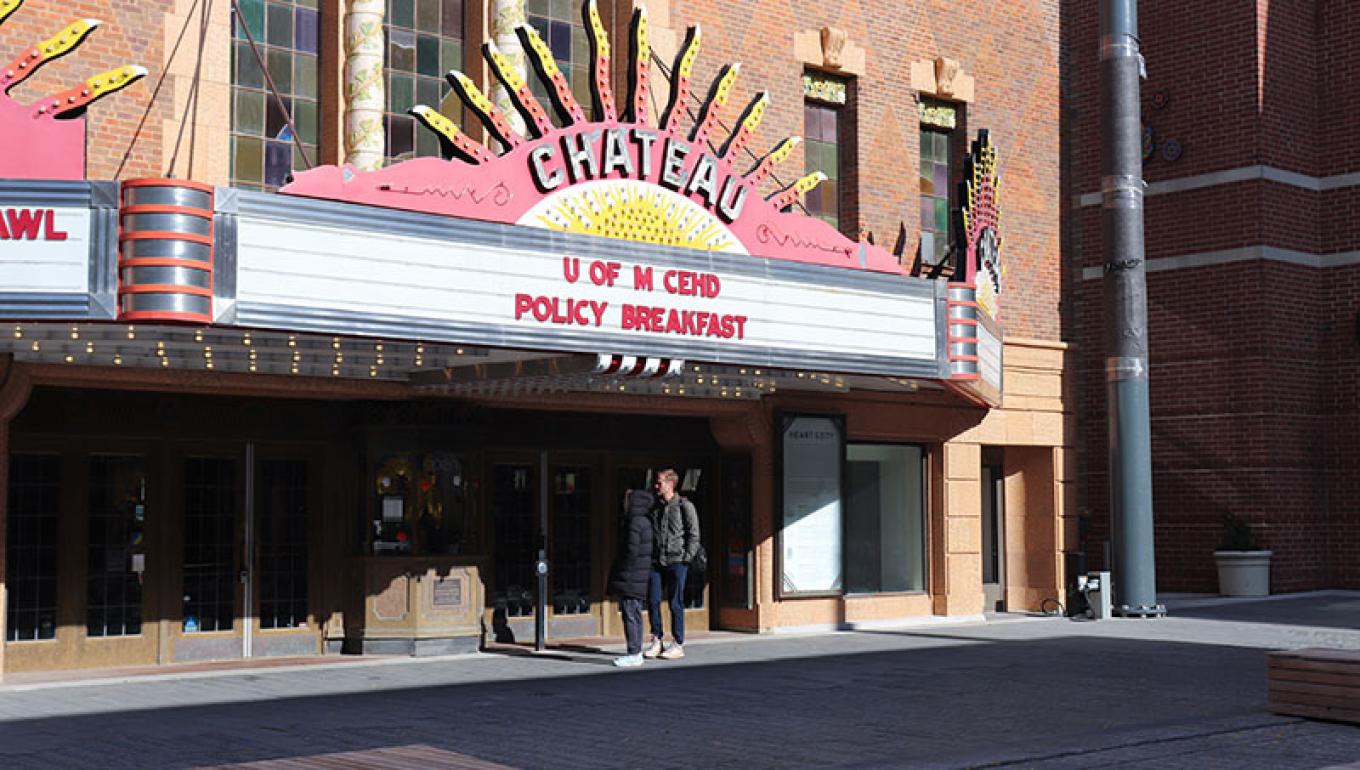
October 2023: The state of the state's accountability system
On October 30, 2023, CEHD hosted more than 120 educational leaders and policy makers for a Policy Breakfast at the Historic Chateau Theatre in Rochester, Minnesota. Katie Pekel, CEHD’s Executive Director of Educational Leadership, moderated a panel of experts, including: CEHD Dean Michael C. Rodriguez, Minnesota Department of Education (MDE) Commissioner Willie Jett, and Superintendent of Rochester Public Schools Kent Pekel.
2023 CEHD Policy Breakfast: Special Education in Minnesota
January 2023: Minnesota PK-12 special education policy
On January 10, 2023, superintendents, directors of special education and legislators from across the state joined us for a panel. With a wide range of professional experience and research expertise, the panel discussed what policies and practices could exist in Minnesota at the state, system, and school level.
Equal opportunity statement
The University of Minnesota shall provide equal access to and opportunity in its programs, facilities, and employment without regard to race, color, creed, religion, national origin, gender, age, marital status, familial status, disability, public assistance status, membership or activity in a local commission created for the purpose of dealing with discrimination, veteran status, sexual orientation, gender identity, or gender expression.