Global Graduate Grants (G3)
This award provides funding of up to $5,000 to support one graduate student conducting international research that demonstrates a strong commitment to global engagement and cross-cultural collaboration.
- Graduate and/or professional degree seeking students
- Currently enrolled in a degree program in College of Education and Human Development
- In good academic standing
- Participating in an exemplary research project in an international location. The research project activities may include data collection, analysis, and/or dissemination of research in high-impact settings. The research project should contribute to the larger body of global research.
- Support research in a global context with potential for high impact contribution in a CEHD field of study.
- All materials should be single-spaced
- Cover letter (one page)
- Demonstrated qualifications to conduct the study in selected global setting
- Overall experience with or commitment to global engagement
- Potential benefits to career and academic development
- Research project proposal showing potential impact and contribution (1-2 page)
- Include research plan and timeline of activities abroad
- Alignment with at least one of the United Nations Sustainable Development Goals
- Ethical considerations and responsibilities of international research
- If data collection is planned, submit IRB approval number with proposal
- Budget showing costs to be covered by G3 (1 page)
- CV
- Two letters of support
- 1 letter from Faculty advisor on impact of student’s research
- 1 letter from another faculty or stakeholder that can speak towards your capacity for international research (letters from student peers are not acceptable)
- Applicants can submit additional letters of support from International partners
- Submit all documents together in one PDF document, including the letters of support
- Recipients of the G3 research grant are required to report back on their research activity with a two-page accounting of expenses, work accomplished, estimated impact, and next steps (publication, presentation, etc.). Photos and other descriptive materials are strongly encouraged.
- Application due date
- Monday, March 26, 2026.
- Application
CEHD International Initiatives: cehdintl@umn.edu
G3 recipients

Danielle Fields
PhD student at Department of Organizational Leadership, Policy, and Development
Program:
Comparative and International Development Education (CIDE)
Project:
Demoralization, Burnout & Attrition: A Comparative Case Study of Educator Well-Being and Flourishing
Summary of work: Demoralization, Burnout & Attrition: A Comparative Case Study of Educator Well‑Being and Flourishing investigates how two international school systems—Kura Kaupapa Māori in Aotearoa New Zealand and Finnish comprehensive schools—create conditions that support strong teacher well‑being and long‑term professional sustainability. The project’s goal is to identify the policies, cultural practices, and school‑level conditions that enable teachers to thrive rather than burn out, generating comparative insights that can inform leaders seeking to build healthier, more human‑centered educational systems.

Sunga Kufeyani
PhD student at Department of Organizational Leadership, Policy, and Development
Program:
Comparative and International Development Education (CIDE)
Project:
Co-Creating Curriculum for Climate Change Education in Rural Mchinji District, Malawi
Summary of work: This project took place in Lombwa Village in Mchinji District, Malawi, where climate instability, extreme poverty, and rapid ecological change are reshaping daily life. Over the summer, Sunga conducted community‑based fieldwork using a Community Design‑Based Research approach that centered Indigenous ecological knowledge and positioned the Land as a sovereign participant in the research process.
Her work included training a local Malawian research team, conducting iterative story‑based dialogues with elders (ages 64–94), teachers, guardians, and students, and engaging in community landscape walks to document Indigenous climate markers such as the Msangu and Msolo trees. Four focus groups further explored how community members collectively understand climate change as both an ecological and spiritual rupture.
The fieldwork contributes to the development of the Umunthu Eco‑Pedagogy framework, which challenges additive, colonial models of climate education and restores Malawian intellectual sovereignty. The emerging findings highlight the community’s view of climate instability as a broken ancestral covenant and trace connections between Chewa ancestral homelands in the Congo Basin and contemporary Malawian rainfall patterns.
Next steps include thematic analysis of the data, community validation of findings in Fall 2026, and preparation of dissertation manuscripts that assert the Land as a central actor in global climate justice discourse.

Sovereign Knowledge Holders and Research Team in Mchinji who co‑created this project

Erma Mujic (she/her)
PhD student at Department of Organizational Leadership, Policy, and Development
Program:
Comparative and International Development Education (CIDE)
Project:
Refugee Youths’ Education & Aspirations in Greece
Summary of work: This summer I spent 5 weeks in Greece conducting field work for my dissertation titled Refugee Youths’ Education and Aspirations in a Transitory Context in Greece. The field work structure was designed in consultation with local partners, refugee-serving nongovernmental organizations, in three locations across Greece. Data collection during this phase included language classroom and safe spaces observations and semi-structured interviews with eleven teachers and nineteen refugee youth (ages 15-30) from Afghanistan, Cameroon, Congo, El Salvador, Ethiopia, Ghana, Iran, Iraq, Kenya, Somalia, Syria and Ukraine. The research sites include:
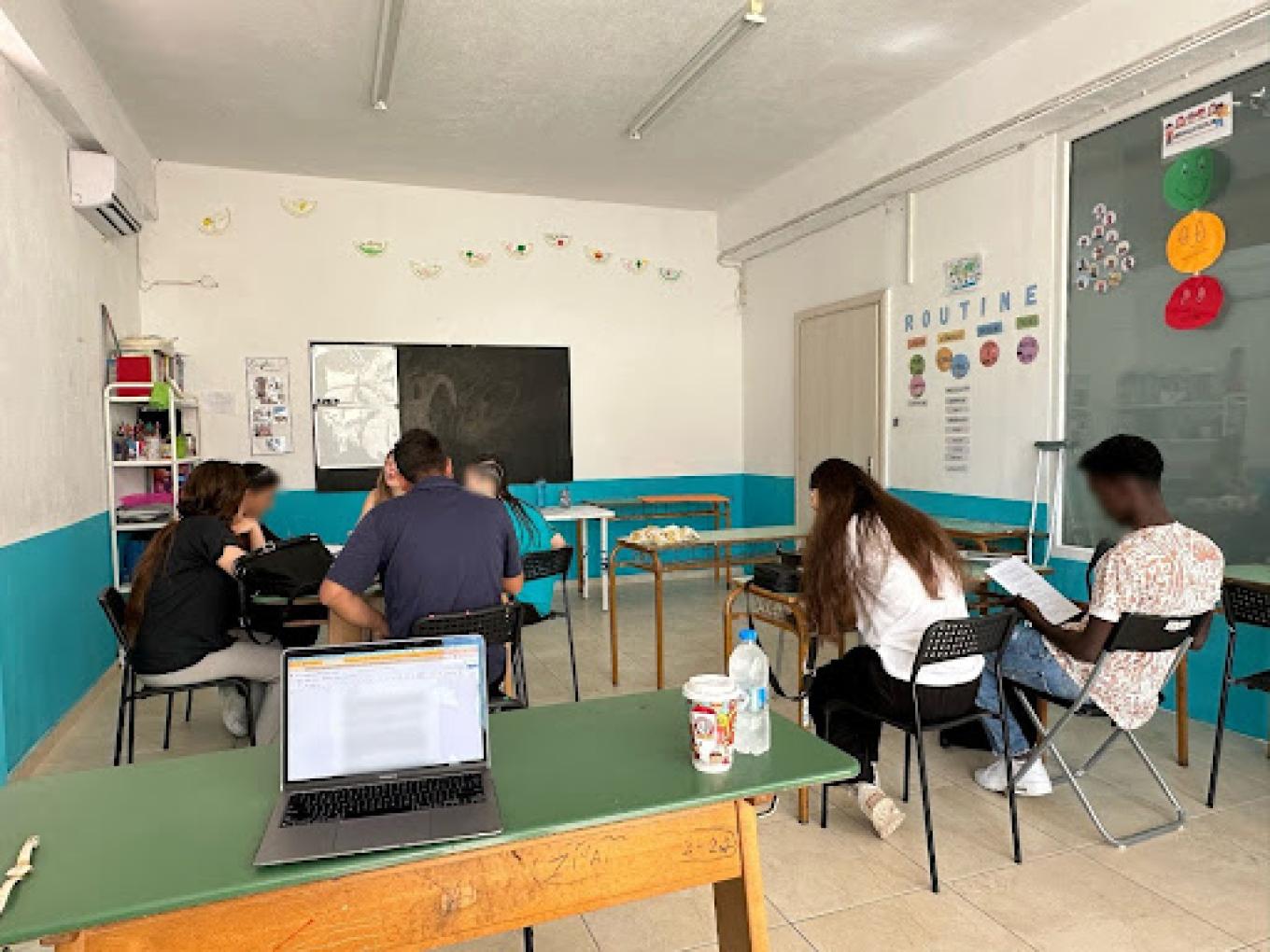
Observing language learning classroom for young adults in Polykastro, home of Nea Kavala Refugee Camp
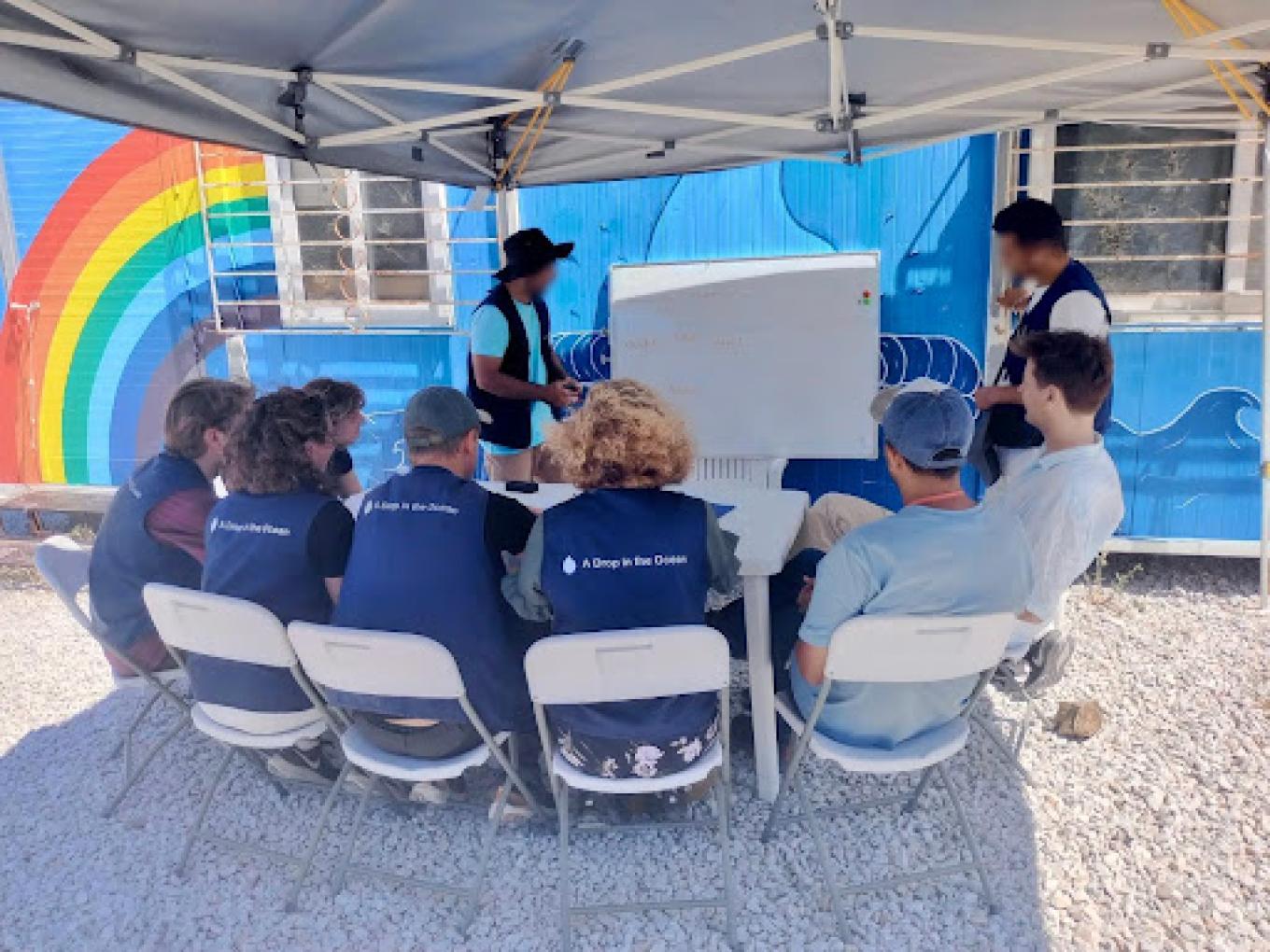
Observing a Farsi class for international volunteers, taught by refugees who are camp residents and volunteers for A Drop in the Ocean
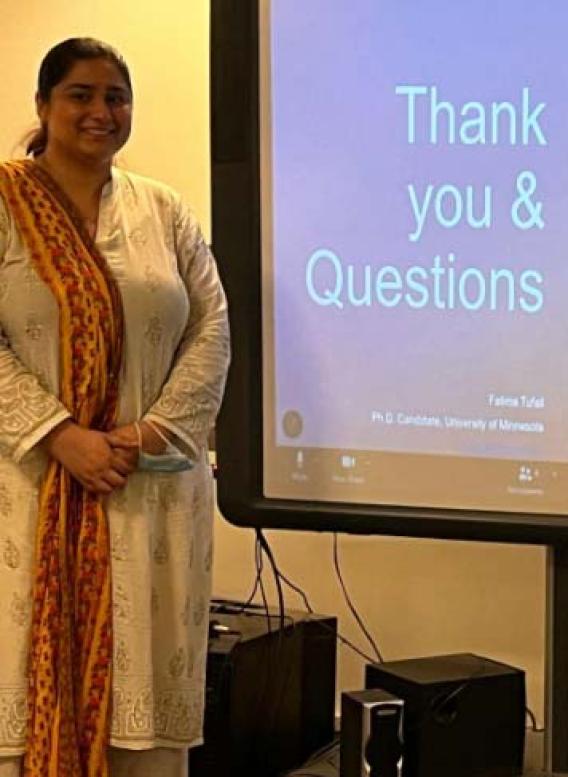
Fatima Bint Tufail (she/her)
PhD student at Comparative and International Development Education
Summary of Work:
In the summer and early fall of 2023, I was able to travel to Pakistan and meet with scholars and institutions to workshop my research findings with other students and scholars. Some of the highlights of my travel are:
- I was invited as a guest speaker to share my experiences with graduate students in a Qualitative Methods course at the Agha Khan University, Institute for Educational Development (AKU-IED) in Karachi, Pakistan. The graduate students and I had a thought-provoking discussion about how critical theories and epistemological commitments shape our research design and data collection/analysis process at every step of the way.
- I presented a chapter from my dissertation at the Human Development and Capability Association (HDCA) Conference in Sofia, Bulgaria. Based on my research, I argued for the need to put affect and emotions at the center of classroom pedagogies for more equitable learning processes.
- I attended a conference on Foundational Learning and Early Childhood Care & Education in Emergencies organized by UNICEF and School of Literacy Department Government of Sindh, Pakistan. I was able to connect with teachers, nonprofit professionals, and government officials working on education and learned how they are centering children’s psychosocial needs in everyday classroom pedagogies.
- I was able to revisit one of my research sites and hold follow-up discussions with teachers and principal. These ongoing discussions and relationship building are very insightful at the analysis and writing stage of my research.
- I connected and engaged with some faculty and staff at the Habib University, Karachi to discuss my research and possibilities for future projects and connections. I was also invited to participate in the visiting scholars’ program at the university.
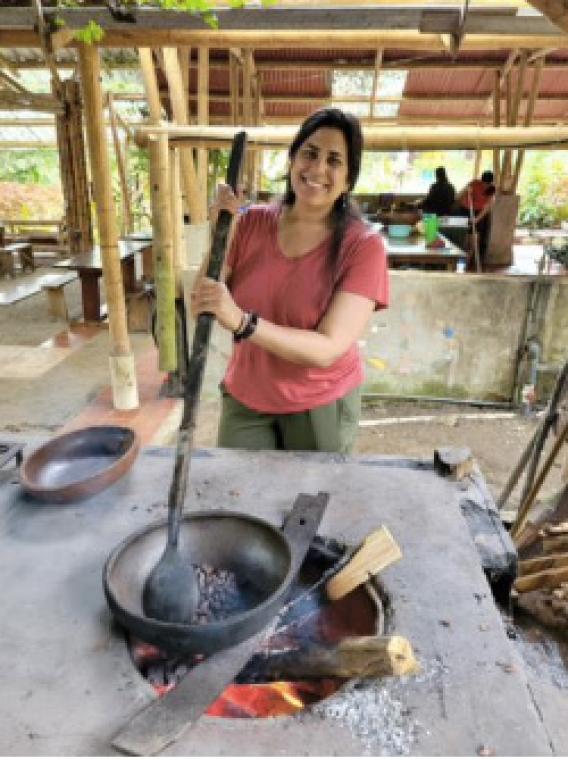
Neela Nandyal (she/her)
PhD student at Comparative and International Development Education
Summary of Work:
In July 2022, I traveled to Ecuador to conduct a pilot study on the attitudes, values, and practices shaping environmental education (EE) in the coastal province of Manabí, Ecuador.
Over the course of three and a half weeks, I traveled to three distinct areas of Manabí: the northern coast, which was most impacted by the 2016 earthquake, and is home to one of the most threatened forests in Ecuador; the central region, which is rich in both small scale and industrial agriculture, and includes the urban centers of Manta and Portoviejo, and the southern coast, which has an economy dependent on both fishing and tourism. I also spent a few days in Quito, which is the center of government policies for both education and the environment.
As part of this pilot study, I conducted 21 semi structured interviews with local educators, conservationists, and other residents.Interview questions addressed topics of environment,sustainability, ecotourism, livelihoods, EE, and climate change. Through coding and analysis of these interviews, I will work to identify the key attitudes, values, and practices shaping EE in coastal Ecuador, as well as explore avenues for future research and collaboration.